

LG Gram 15Z980 review: It’s rich and thin, and its battery doesn’t stop - seversonnormis1964
Packing a quad-core 8th-generation Intel processor and a robust stamp battery into an impressively thin and light shell, the peppy but pricey LG Gram cranks all day without weighing you out. While we love the Gram's lithe design and especial battery sprightliness, laptop shoppers look for diaphanous speed may be disappointed past the scheme's relatively casual stride. We also had much quibbles with the Gram's incommodious keyboard.
Price and specifications
We tested the top-of-the-line model of the LG G, which costs a cool $2,000 and boasts a 15.6-inch touch display, a quad-core 8th-generation Intel Core i7-8550U processor, 16GB of DDR4 RAM, and a pair of 512GB solid-state drives. If you'd rather not spend two distinguished on a laptop computer, there are three cheaper versions of the G to consider, including (at the bottom ending) a overmuch more cheap $1,250 model with a Meat i5 central processor, a I 256GB SSD and 8GB of RAM.
 Adam Patrick Murray/IDG
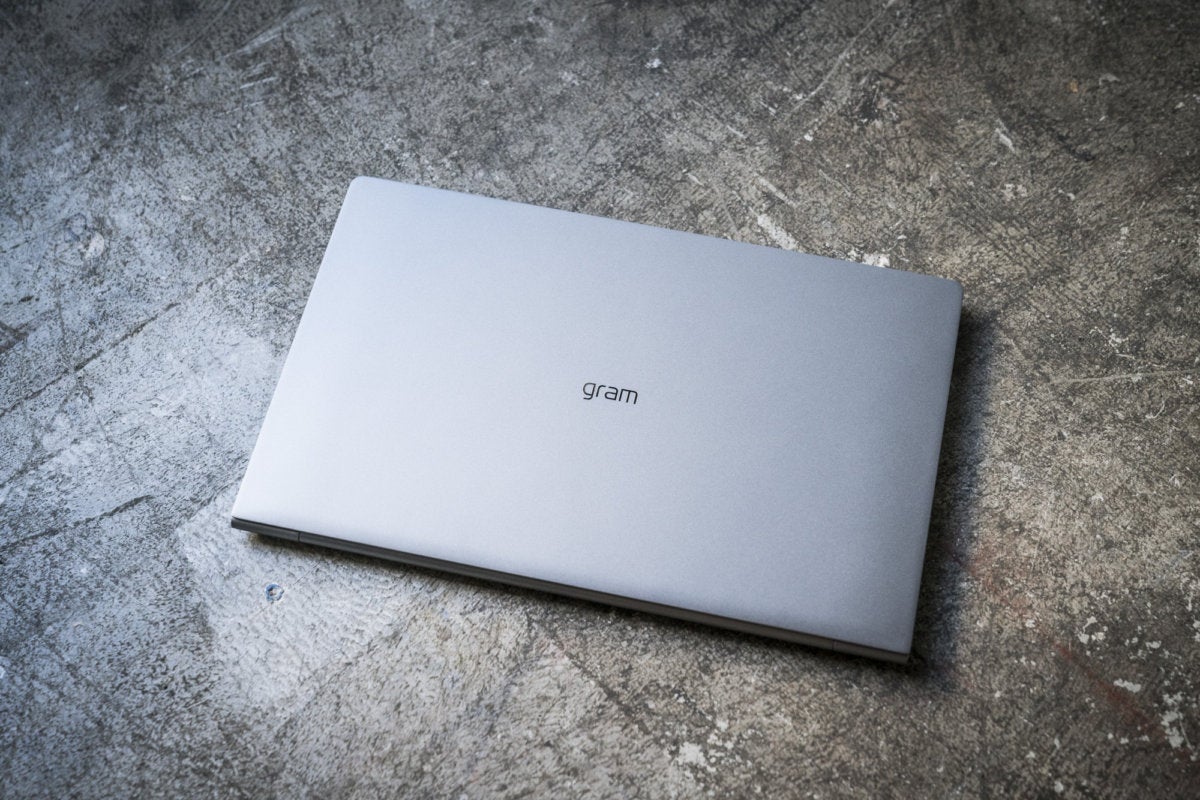
 Weighing a mere 2.4 pounds, the sturdy LG Gram is so light information technology almost feels fake.
The first thing you'll notice approximately the competently-named LG Gram is its weight, or lack thereof. Weighing in at about 2.4 pounds, the Hans C. J. Gram feels impossibly light, like one of those fake laptops you'll find in furniture showrooms.
At 0.7 inches, the Gram's metal alloy shell (which, according to LG, boasts military-grade resistance to shock, shaking and even spraying salt water) is a bit thicker than much ultralight competitors A the Dingle XPS 13 and the HP Phantom x360, but it's still just as light or a shade hoy than those cardinal systems—and recall, the LG Gram has a 15-inch display, versus the 13-inch screens along the Dell and Horsepower.
Of of course, there's also the LG Gram's 12-ounce Alternating current adapter to see. Toss that in, and the LG Gram's summate packing weight swells to a trifle over deuce-ac pounds. Then once again, the Gram's battery life sentence is indeed good (as you'll see), day-trippers can probably afford to leave the power cord at home.
Display
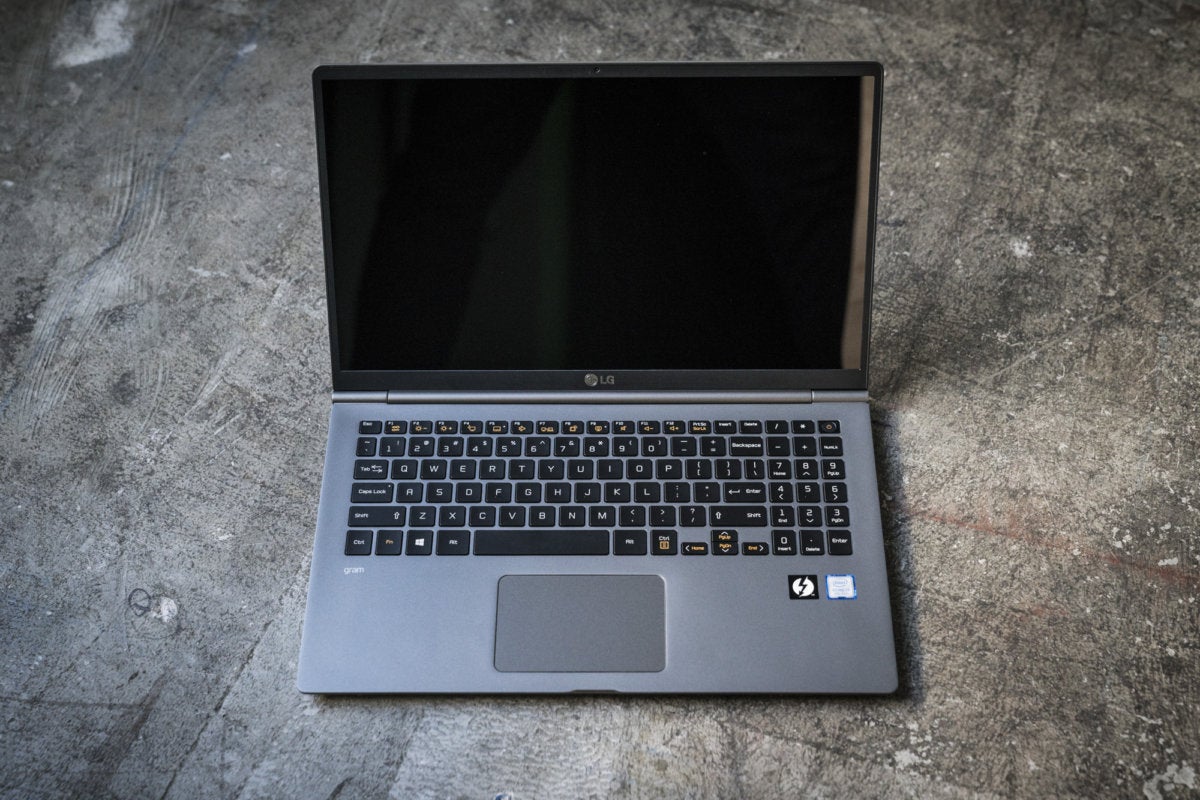
The LG Hans C. J. Gram's 15.6-inch display is a tur of a mixed bag. Spell the FHD (1920×1080) touchscreen looks sharp and comparatively vivid, it's a tad dim, with a utmost brightness of only 265 nits (Beaver State candelas). That figure lands a little above our minimum standard of 250 nits for comfortable indoor reading, but it's cured below the 300-nit readings we've seen along competing laptops. Generally speaking, brighter is better, particularly if you'Ra difficult to get work done outdoors or near a shiny window.
 X Saint Patrick James Augustus Murray/IDG
 The LG Gram's 15-inch expose boasts great viewing angles, but IT's a tad on the dim side of meat.
That aforesaid, the viewing angles along the G's IPS panel are quite impressive. Fifty-fifty when I scooted over far to the side, I could scarcely notice any screen fading. Those solid viewing angles held up from the top and bottom, too.
The LG Gram's touchscreen did a good business of registering my taps and swipes, but keep your Active Pens stowed, as the screen lacks write support.
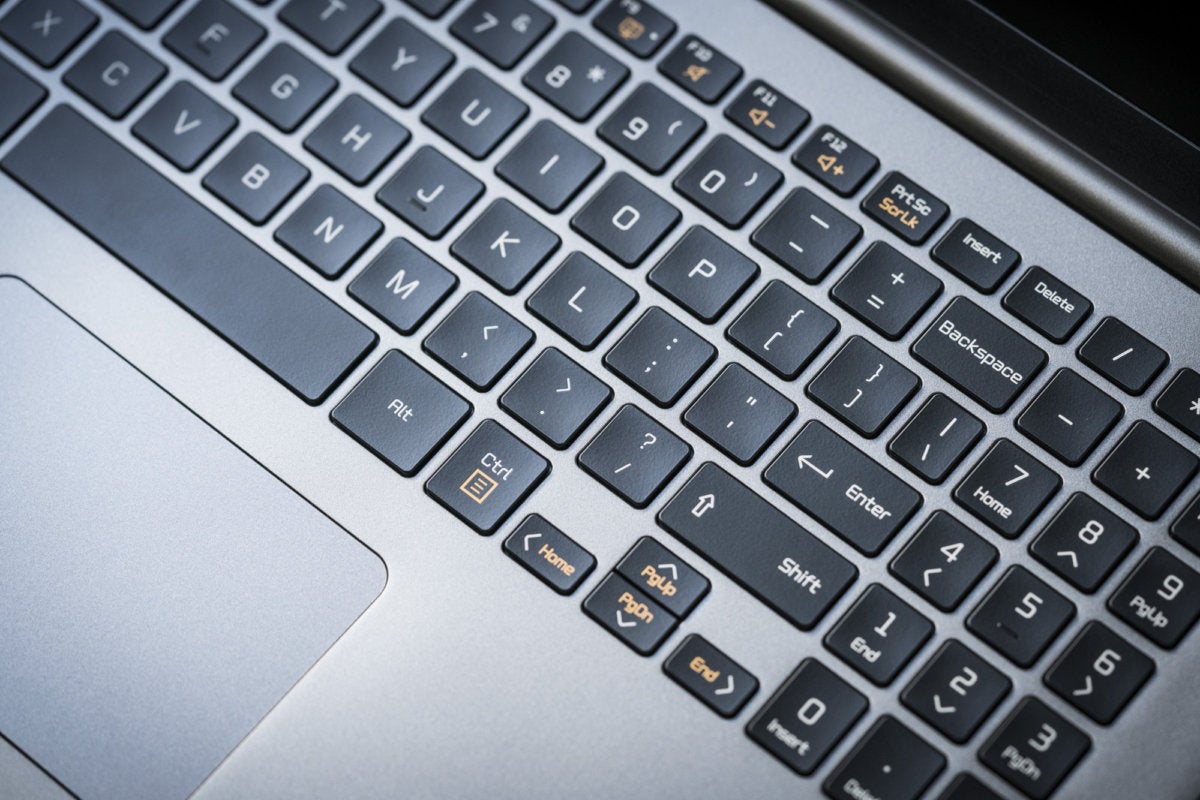
The LG Gram doesn't stint in the keyboard department, oblation awake a full numeric keypad along with a fingerprint reader embedded in the power key, which sits in the pinch-right corner of the keyboard.
While a votive numeral keypad is always a nice touch in a laptop, the numeric keys themselves are a trifle narrower than the main number and varsity letter keys. Annoyingly, my fingertips kept missing the smallish Backspace and Enter keys, hitting the numeric keys or else. I'm sure one would have victimised to the key layout over metre, but my first touch typing experience with the Gram was a thwarting one.
 Adam Patrick Murray/IDG
 The LG Gram comes with a dedicated numeric computer keyboard, but we'rhenium bummed by the smallish Backspace and Go into keys.
Among the more interesting hotkeys on the LG Gram include ones that toggle airplane musical mode and the touchpad, along with an easy-on-the-eyes "reader" mode (basically LG's version of the Night Light feature in Windows), and a keyboard backlighting hotkey that cycles between cardinal modes (piping, low, and off). Last but non to the lowest degree, a settings hotkey launches LG's "Manipulate Center" settings empanel.
The LG's middle-size touchpad gets the lin through with with a minimum of fuss—and so, I didn't move over the touchpad a irregular thought throughout my testing. That's a good thing.
The Gram's built-in stereo speakers sound unsurprisingly tinny and bass-fewer. That said, you buttocks slip on a pair of cans and enable the laptop's support for DTS Headphone:X, a surround-sound format that lets you pick from one of trio phone profiles (beamy, in-front and traditionalistic) and media types (entertainment, games, and sports). For Pine Tree State, the effect was subtle, adding a slight amount of depth and roominess to the practical soundscape in my headphones. Nice, but I didn't particularly miss the DTS mode when I toggled information technology off.
The LG Gram's 720p webcam, integrated in the top bezel of the display, cranked unsuccessful relatively smooth and sharp images. Colours were a trifle washed-out and the video recording looked a bit grainy, but for the most part, Skype chatters should equal pleased with what they see.
Ports
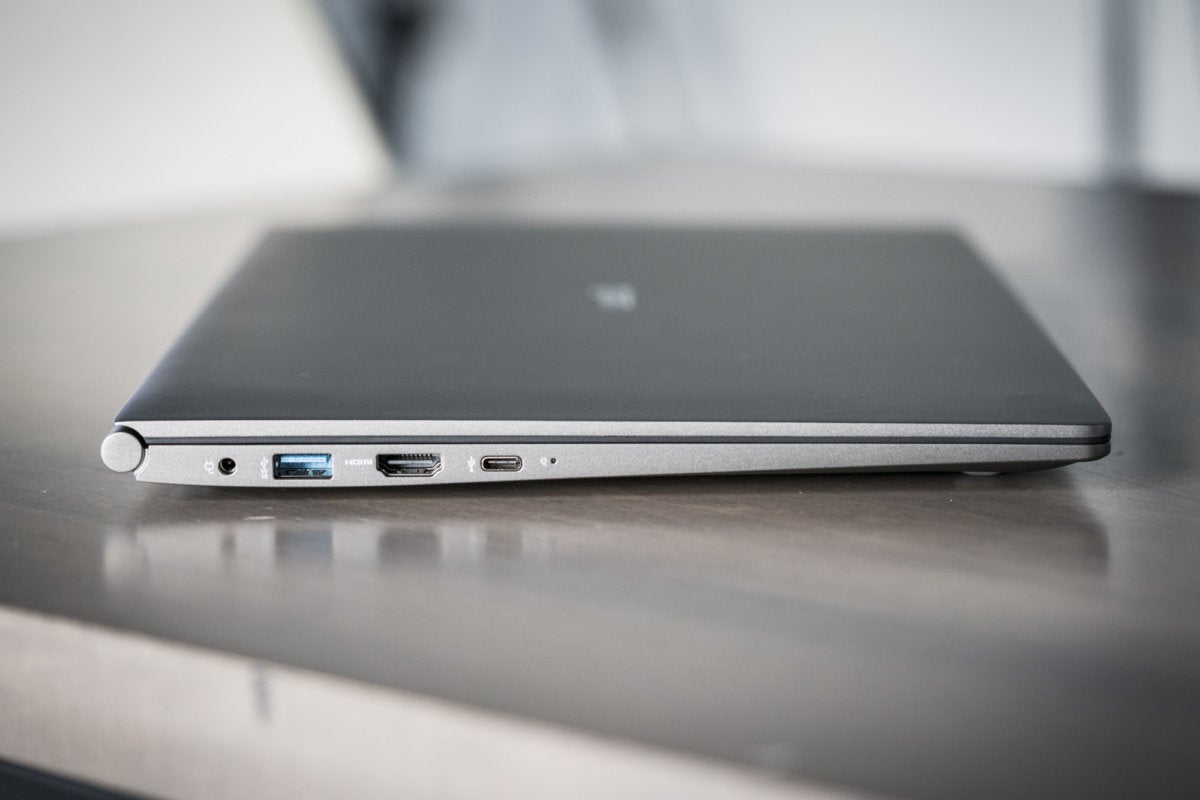
The LG Gram boasts a relatively generous selection of ports, start with cram full HDMI, USB 3.0 A, and a mateless Thunderbolt 3 left (a four-lane implementation for transferee speeds up to 40Gbps, summation USB Top executive Speech 3.0) on the left wing side. Also on the left side: a votive barrel-style charging port.
 Adam Patrick Murray/IDG
 Three cheers for Bolt of lightning 3! We like the full HDMI and USB 3.0 ports, too.
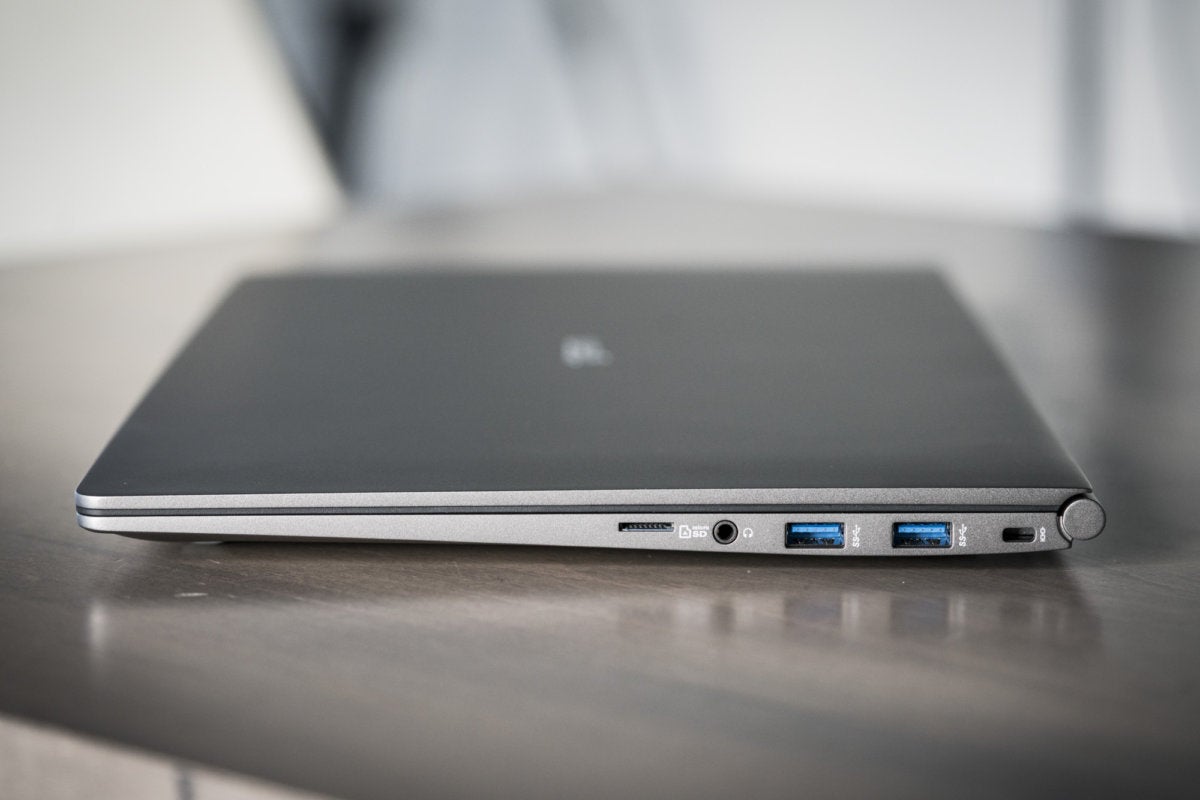
On the right, you get two Sir Thomas More USB 3.0 ports, a Micro SD plug-in reader and a headphone jack.
 Adam Patrick Murray/IDG
 Two more USB 3.0 ports sit on the LG Hans C. J. Gram's right side, along with a Micro SD card referee.
Tired all, not repentant, although we wouldn't have disposed a second Thunderbolt 3 port, particularly given the Gram's lofty price trail.
General execution
A quad-core CPU in a razor-thin 15-inch laptop? You bet, thanks to Intel's 8th-generation Kaby Lake Refresh processors. The LG Gram is among the a la mode notebooks to cram this strong just heat-conscious chip into a thinly shell. Patc the Gram's i7-8550U processor hasn't been cranked up to the max, the system manages to turn in a relatively peppy carrying out.
PCMark 8 Work 2.0 Stereotypic
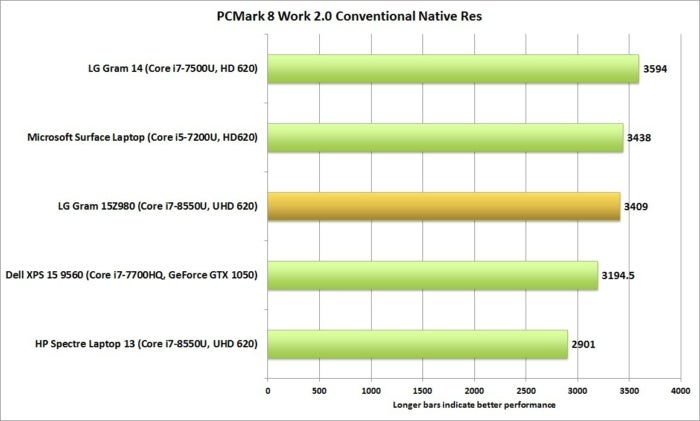
Prototypical, we checked out the LG Gram's carrying into action with everyday tasks using PCMark 8 Work Conventional, a benchmark that simulates much day by day Microcomputer duties as entanglement browsing, picture conferencing and tinkering with spreadsheets. Generally speaking, whatever score above 2,000 makes for smooth and flexible Office performance.
 Melissa Riofrio/IDG
 The quad-heart LG Gram bimanual our PCMark 8 Word benchmark with still, but then do cheaper dual-core laptops.
Unsurprisingly, the quad-effect LG Gram floated over the legal community with allay, but so did a pair of dual-gist competitors, such as the older 14-inch LG Gram and the Microsoft Surface Laptop. That brings us to our standard disclaimer when it comes to paying top dollar for a musculus quadriceps femoris-core notebook: Unless you're planning on encoding video or acting other Central processing unit-intensive tasks, a cheaper dual-core system of rules will do the thaumaturgy just as fortunate.
HandBrake
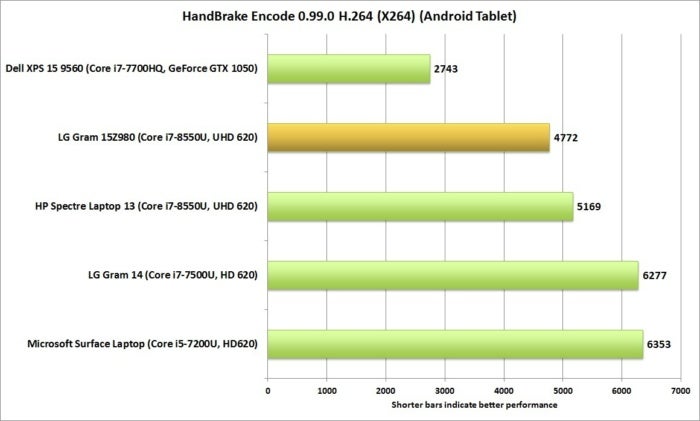
Moving on to a tougher challenge for quad-burden laptops, the HandBrake test gives US a better idea of how a given system handles a crushing CPU load, such as (in this case) encoding large TV files.
 Melissa Riofrio/IDG
 The LG Gram and its 8th-generation Intel CPU fork over a reasonably bouncing Handbrake performance, simply we've seen faster.
Patc the LG Gram doesn't break any HandBrake records, it runs reactionary aboard its quad-core competitors, edging out the 8th-generation HP Apparition Laptop 13 just coming in a distant forward to the i7-7700HQ-packing Dell XPS 15 9560, a similar-sized just far heavier laptop with a superior 7th-gen CPU.
One thing I noted during the HandBrake test was that unlike different laptops I've seen, the LG Gram doesn't rev ahead its fans or capitulum its CPU clockspeed at the beginning of the encoding process. That could stand for LG took a "slow-but-steady-wins-the-race" approach with the Gram, a reasonable trade-off given the Gram's thin and lightweight design.
Cinebench R15
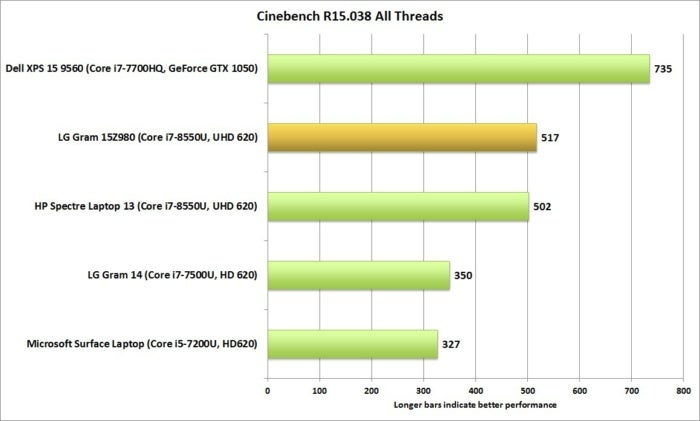
Another torture test for laptop computer processors, our adjacent benchmark turns aweigh the heat (literally) on the CPU as it renders a 3D picture.
 Melissa Riofrio/IDG
 The LG Gram's Cinebench results Crataegus oxycantha not be the fastest, but they're fast enough given the system's slim-and-trim design.
As with its HandBrake results, the LG Gram turned in a solid but not astounding Cinebench performance. It easily dusted dual-core group systems and kept pace with the quad-core HP Spectre Laptop computer 13, but fell well behind Dell's quadrangle-nitty-gritty XPS 15 powerhouse.
Again, the Gram's CPU ne'er broke a sweat during the Cinebench test, opting for a steady pace quite than a full-on sprint. While I did notification the LG Gram's processor fans gently purring during the exam, the sound was far short of the roar I've heard on other systems.
3DMark Pitch Diver 1.0 Total
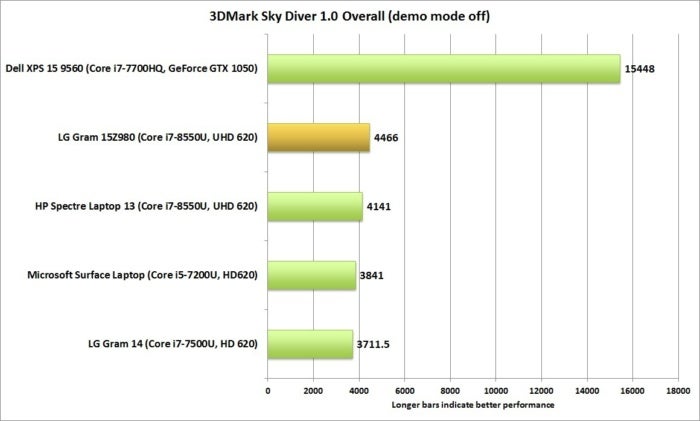
With its integrated Intel UHD Graphics 620 graphics core, the LG Gram shouldn't personify expected to deliver anything to a higher degree middling graphics performance.
 Genus Melissa Riofrio/IDG
 Without a discrete GPU, the LG Gram graphics performance can't live expected to compete with the likes of the Dell XPS 15.
So, its 3DMark Sky Diver try out results she the quad-core notebook loitering with its fellow mainstreamed-GPU systems. Unsurprisingly, the Dingle XPS 15 9560 with its discrete GeForce GTX 1050 graphics chip leaves everyone other in the dust.
Barrage fire life
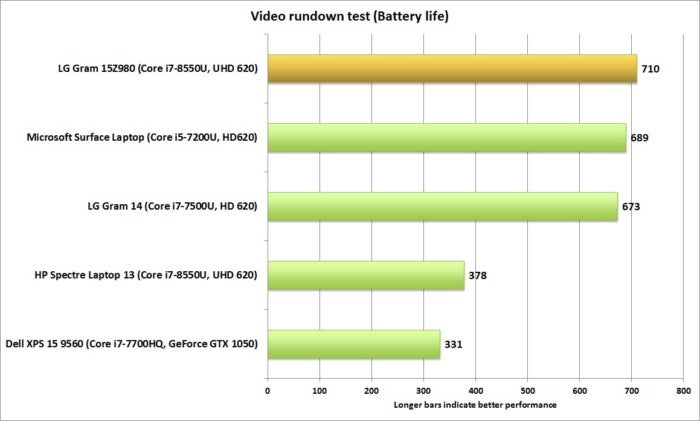
While information technology's been content to hang midmost of the pack in our other benchmarks, the LG Gram surges ahead in our barrage drainpipe test.
We trial run battery life in notebooks aside looping a 4K video with sort cleverness at about 250 nits (which agency, for the Gram, cranking up the brightness all the means) and the volume set at the halfway mark off, with earbuds attached.
 Melissa Riofrio/IDG
 It may non be the fastest 8th-generation laptop happening the block, simply the LG Gram's stellar battery life is tough to beat.
With its score of 710 minutes, or just short of 12 hours, the LG Gm and its roomy 72Whr battery noses ahead of such energy-efficient dual-inwardness systems as the Microsoft Surface Laptop computer and the LG Gram 14, patc thoroughly outlasting the turbo-charged but world power-hungry Dingle XPS 15, which scarcely lasted 5.5 hours in our battery life test.
Conclusion
The 15-edge in LG Gram isn't the quickest 8th-generation quad-core laptop we've tested, merely it's certainly one of the lightest, and its stellar battery life makes up for its minor performance shortfalls. The Gram's incommodious keyboard takes getting used to, however, and budget-conscious laptop computer shoppers may check at the $2,000 price tag.

Source: https://www.pcworld.com/article/407949/lg-gram-15z980-review.html
Posted by: seversonnormis1964.blogspot.com
0 Response to "LG Gram 15Z980 review: It’s rich and thin, and its battery doesn’t stop - seversonnormis1964"
Post a Comment